
Every year on June 16, Africa marks the Day of the African Child, a moment set aside to reflect on the rights, welfare and future of the continent’s children.
The day commemorates the courage of the school children of Soweto, South Africa, who in 1976 took to the streets to protest an education system designed to limit their opportunities and suppress their identity.
The students were protesting the apartheid government’s decision to impose Afrikaans as a language of instruction in black schools, as well as the poor quality of education reserved for black learners.
Their peaceful demonstration was met with brutal force. Hundreds of children were killed or injured. Images such as that of the young Hector Pieterson, fatally wounded during the protests, became enduring symbols of resistance against oppression.
The Soweto uprising transformed the struggle against apartheid and demonstrated a profound truth: children can be powerful agents of social change.
That legacy remains relevant today.This year’s Day of the African Child was observed under the theme: “Ensuring Universal Access to Water, Sanitation and Hygiene for Every Child in Africa.” At first glance, the theme appears to belong squarely within the realms of public health and infrastructure.
Discussions about water, sanitation and hygiene often focus on boreholes, pipelines, toilets and handwashing facilities. Yet the theme raises a broader question: what does it actually take for a child to enjoy the right to education and realise their full potential?
The answer extends beyond classrooms and school buildings. A child who attends school without access to clean water, safe sanitation facilities or proper hygiene is at a significant disadvantage. Such a child may struggle with illness, absenteeism and reduced concentration. Their ability to learn is compromised even when they are physically present in school.
At the same time, a child without access to books faces a different but equally serious barrier. Without books, opportunities to develop literacy, critical thinking and imagination are limited. Education becomes narrower and less meaningful.
In this sense, access to books and access to clean water are not separate issues. Both are fundamental components of an environment in which children can learn, grow and thrive.
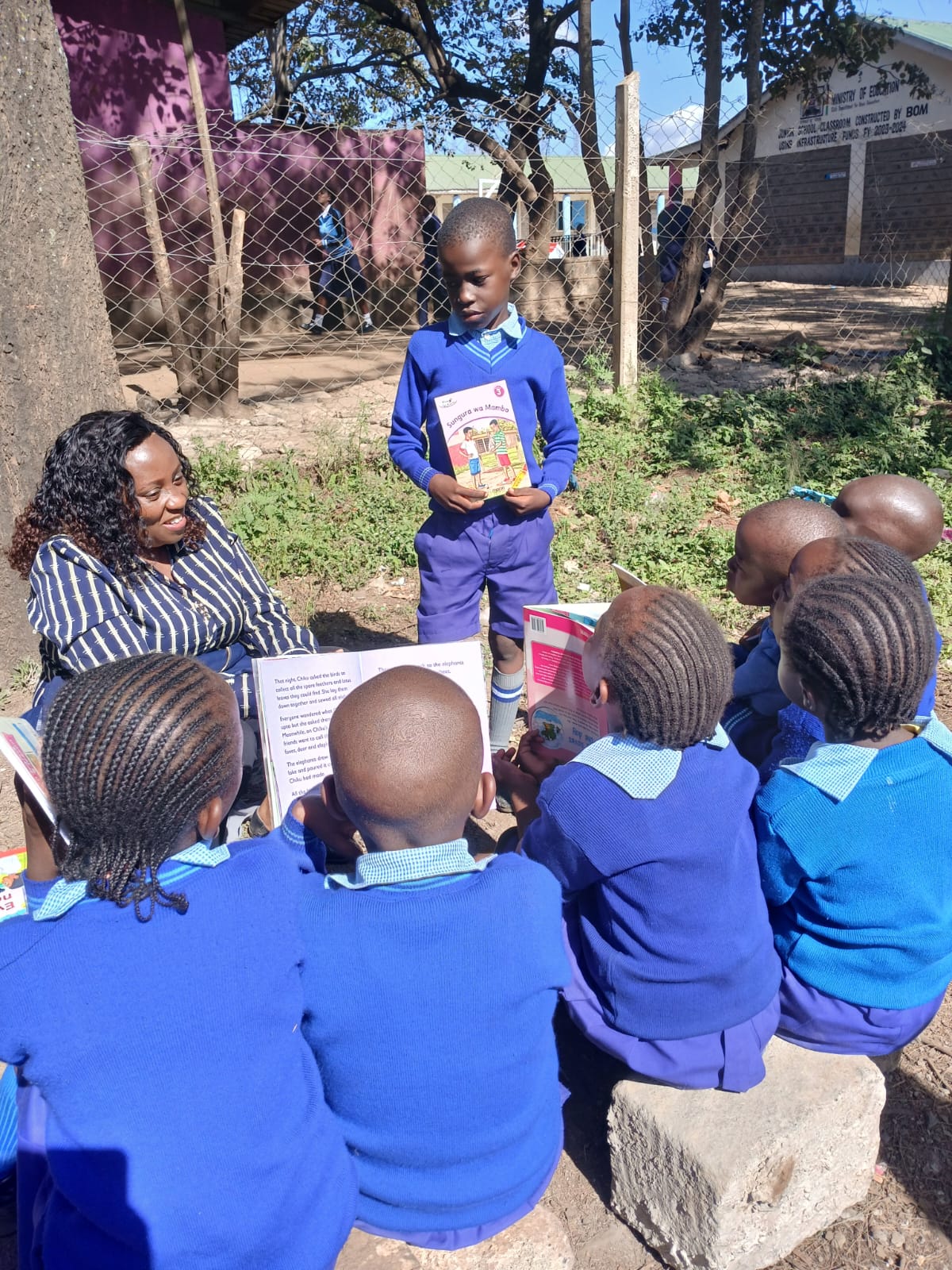
This connection became particularly clear during this year’s Day of the African Child activities organised by Moran Publishers with pupils from Wangu Primary School in Dandora.
Speaking on the relationship between books and the day’s theme, Moran Publishers Managing Director Mary Maina observed that meaningful education requires much more than a teacher and a classroom. Children need books to read. They need water to drink. They need safe sanitation facilities. They need an environment that protects their dignity and supports their wellbeing.
These elements work together to create conditions in which learning can flourish. Children’s books play a unique role in this process because they do far more than teach literacy. Stories help shape attitudes, values and behaviours. Through stories, children learn how to understand the world around them and how their actions affect others.
A well-written story about a child fetching water from a polluted river can help young readers appreciate the importance of protecting water sources. A story about handwashing can reinforce healthy habits. A story about waste management can encourage children to become responsible custodians of their environment.
The lessons embedded in stories often stay with children long after classroom lessons have been forgotten. This is why children’s literature should be viewed as an important partner in advancing development goals. Investments in infrastructure are essential, but infrastructure alone cannot change behaviour.
Pipelines can deliver clean water, but stories can help children understand why water must be protected. Sanitation facilities can be constructed, but stories can nurture the habits that make those facilities effective.
In many ways, children’s books help translate public policy into everyday understanding. As Africa continues to address challenges related to water, sanitation and hygiene, it is worth recognising that lasting change depends not only on physical infrastructure but also on education and values.
The children who inherit tomorrow’s world must be equipped with both knowledge and a sense of responsibility. The story of Soweto reminds us that children have the capacity to influence history. Today’s children may not be marching in the streets demanding educational rights, but they are still capable of driving positive change in their homes, schools and communities.
To nurture such a generation, Africa must invest in both the tangible and the intangible: in water systems and in books, in classrooms and in stories.
After all, infrastructure may build schools, but stories help build citizens. And if we hope to raise a generation that values clean water, protects the environment and contributes positively to society, then the stories we place in children’s hands matter just as much as the facilities we build around them.