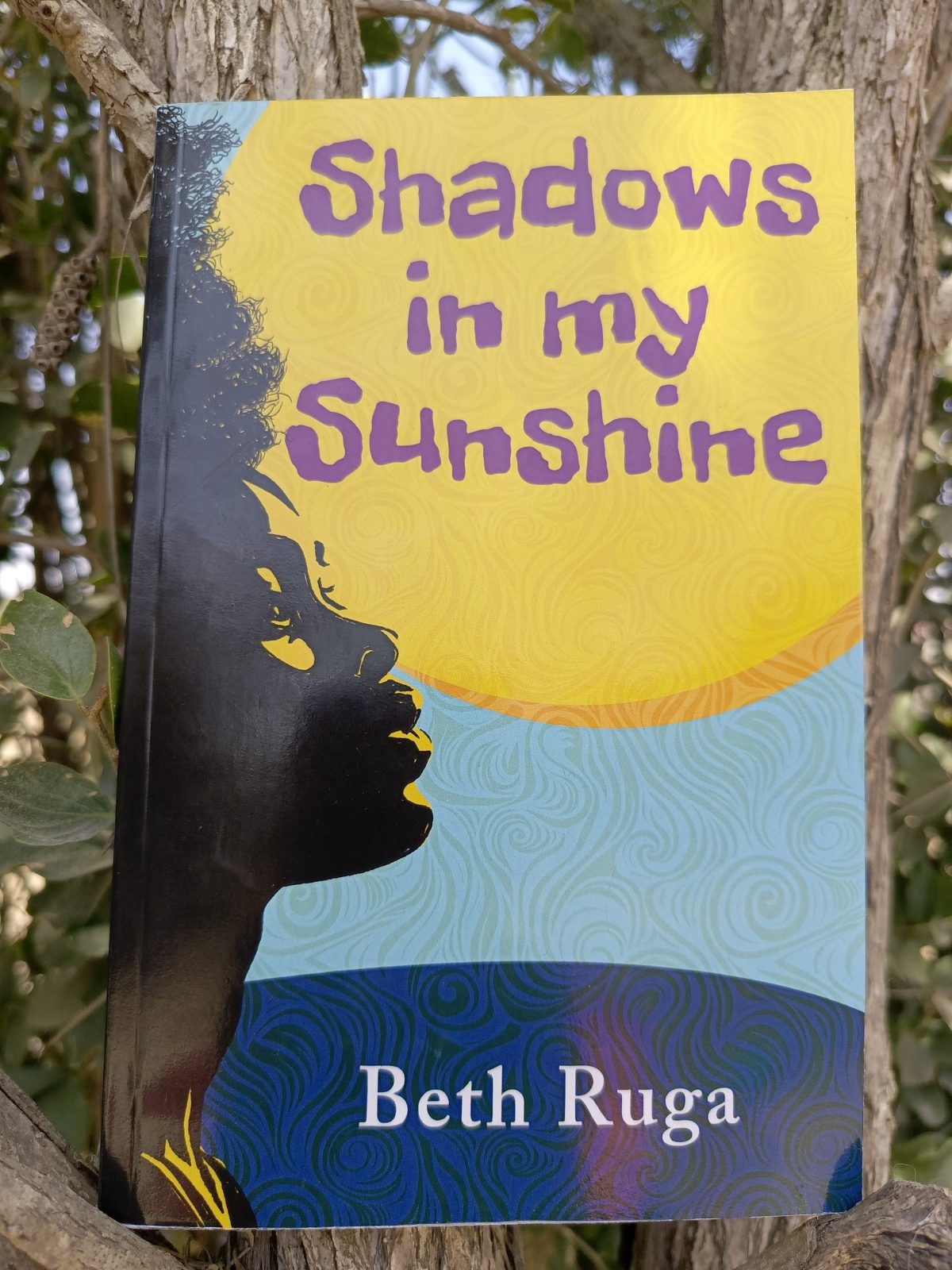
TITLE: Shadows in my Sunshine
AUTHOR: Beth Ruga
PUBLISHER: Self
Mother and daughter bid each other farewell as the daughter goes back to college; it is to be the last time they are seeing each other.
Even before she gets to school, a cruel twist of fate sees them ‘admitted’ at the same hospital under different circumstances, almost at around the same time. The bus, Wangeshi is travelling in is involved in an accident and she is admitted in the general ward.
Her mother, Waithiegeni, breathes her last and is taken to that hospital’s morgue. Her many years, battling HIV/Aids have come to an end.
Kiama, Waithiegeni’s only brother, who took her to the mortuary, must now inform Wangeshi of her mother’s demise, not knowing that she is admitted at the same hospital. Even after learning that his
niece was involved in an accident and that she is admitted in hospital, he makes the journey from Nakuru to Nairobi, in the mistaken belief that the accident took place in Nairobi, where she goes to college.
Welcome to the breathless and chaotic world of Shadows in my Sunshine, a debut novel by Beth Ruga.
The name Ruga might not ring a bell to most readers, but in the rapidly growing writers’ community in Nairobi, she is a household name.
You will not miss Ruga at any writing event, especially book launches; she is there cheering authors. She is also a regular feature at the monthly Amka literary workshops hosted at the Goethe Institut.
Ruga, ever jovial, always smiling, is always hanging out with the literary crowd. The obvious assumption is that she, too, is an author.
Her Facebook page, where she calls herself Tataguo – your aunt in Gikuyu, where she documents her humorous escapades, betrays a creative mind. The only thing missing was a book in her name.
This changed in mid-December 2025, when she teased the cover image of her book.
Back to the book.
Wangeshi is the book’s central character, and who was dealt an unfair card at birth. Waithiegeni, her mother, knew she was HIV positive, when she was pregnant with her. Those who know something about HIV/Aids, know that chances of baby borne of a HIV positive mother contracting the
disease are quite high.
That is how poor Wangeshi contracted the disease – at birth. She is raised by a single HIV positive mother – her father had died much earlier. To her mother’s credit, she accepted her condition, lived positively, faithfully taking anti-retroviral drugs together with her daughter. In spite of her condition, Wangeshi lives an otherwise healthy life. A hard
worker and good in her studies, she is determined to lead a sunny life in spite of dark shadows lurking over her.
When we meet her, she is a university student, going steady with Jasiri, her boyfriend, also a student. As the relationship grows in strength, she wonders how to break news of her condition to Jasiri. She is worried that he might dump her just like her previous boyfriends did after they learned the truth.
The accident and accompanying death of her mother bring the two lovebirds closer together. On the day she plans to reveal her secret, Jasiri spoils it by confessing to infidelity – a case of a one night tryst with an older woman. Jasiri expects empathy and forgiveness from Wangeshi, who is having none of it.
Herein lies the contradiction or dilemma, if you like. Wangeshi wants and expects empathy and understanding from Jasiri, but extends none of that to the poor boy child. That’s human nature for you.
Through mediation, they make up and now plan to take it to the next level, just as their graduation beckons. Wangeshi, when she is ready to tell Jasiri her health condition, is pleasantly surprised to learn that the boyfriend knew all along and is okay with it.
Here, Ruga lets authorial interference get in the way by giving a spoiler about Jasiri’s prior knowledge of Wangeshi’s HIV status instead of allowing the reader to get Jasiri’s reaction first hand.
The author treats Ndanu rather shabbily. After being a faithful friend to
Wangeshi and even offering to act as mediator when Wangeshi and Jasiri broke up, Ruga casts her as the villain who didn’t want the two to get married.
The explanation for her behaviour was less than convincing and more of an afterthought. Ndanu, deserved better.
Shadows in my Sunshine is a love story of the happily-ever-after variety, with Wangeshi and Jasiri getting good jobs, getting married and having kids. Ruga must be commended for the sensitivity with which she tackles the topic of HIV/Aids, discordant couples and how they can have sex relations – with care of course – and the fact that HIV free children
can come out of the union. Still, she is discerning enough not to over glamourise the disease. The death of Waithiegeni is the author’s way of reminding the reader that HIV/Aids is still a killer disease.
This disease has lately acquired renewed spotlight following reports that it is on the resurgence, in the face of reduced donor flows, occasioned by (US President) Donald Trump’s onslaught on USAID, the body that used to bankroll HIV/Aids therapy in Africa.
Narratives that revolve HIV/Aids tend to be sad and bleak but Shadows in my Sunshine proves that this topic can be tackled without knocking out the elements of fun and adventure. After all, life, as they say, is for the living.
With this book Ruga proves what a masterful storyteller she is. The
twists and turns; the element of surprise – Julia’s pregnancy (by Jasiri?) make the book all the more fun and readable.
The cover artwork and the choice of colours are quite thoughtful and on point. I was left with a feeling that the book should have been longer; the plot begs a lengthier rendering.